
 Pull-through: most reviewed
Kitchellence 3-Stage Knife Sharpener
For when you want a simple tool, from a heavily reviewed listing. 4.5 stars from 39,193 ratings, the most of any pick here.
Independent buying guide · Prices checked November 21, 2026
KNIFE SHARPENERS:
Start with your knife’s edge angle and the routine you will keep, then compare 20 tools in six methods: honing rods, pull-through, whetstones, electric, rolling and guided kits. Amounts are approximate, in US dollars.

The most reviewed pick in three types, by Amazon ratings in late October 2026. We have not tested them: this is a starting point. Want another type? Use the filters below.
Pull-through: most reviewedFor when you want a simple tool, from a heavily reviewed listing. 4.5 stars from 39,193 ratings, the most of any pick here.
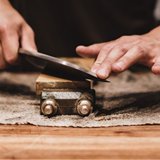 Whetstone: most reviewed
For when you want to learn angle control, with a base and an angle guide in the kit. 4.6 stars from 25,724 ratings, the most among the whetstone picks.
 Electric: most reviewed
For when you want a heavily reviewed electric sharpener with two stages. 4.5 stars from 18,858 ratings, the most among the electric picks.
A sharpener should fit the knives you own and the time you want to spend maintaining them. A compact manual tool, a powered machine and a sharpening stone can all have a place in a home kitchen, but they offer different amounts of guidance, flexibility and setup.
We have not personally tested these products; this guide compares tool designs, listing information and published manufacturer information.
We are not paid by brands to feature or recommend them. We may earn a commission from qualifying purchases through our affiliate links.
These are practical trade-offs to consider, not results from a hands-on test.
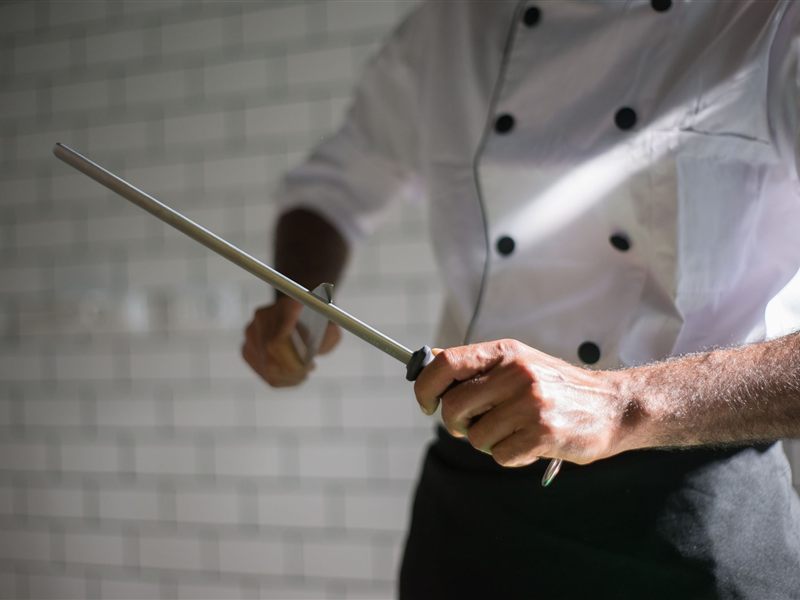
A good fit if you want keep a good edge between sharpenings.
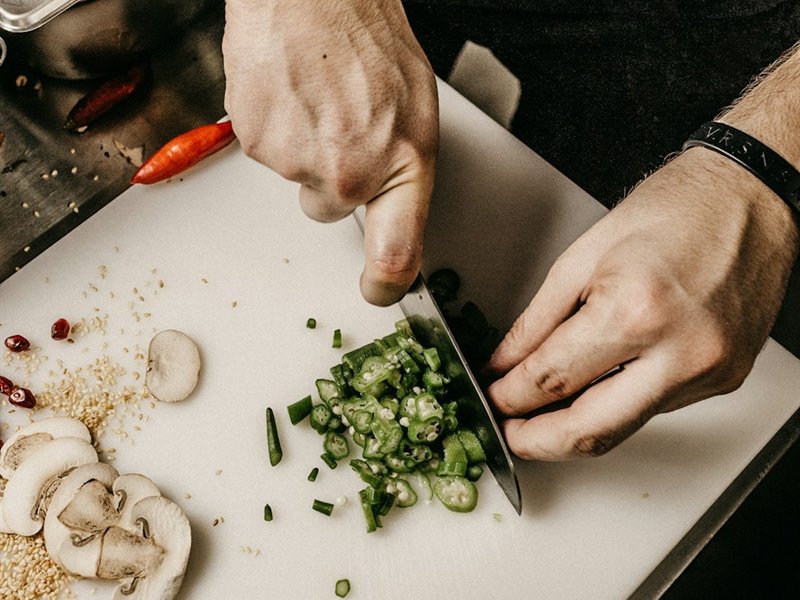
A good fit if you want compact, simple, no outlet.
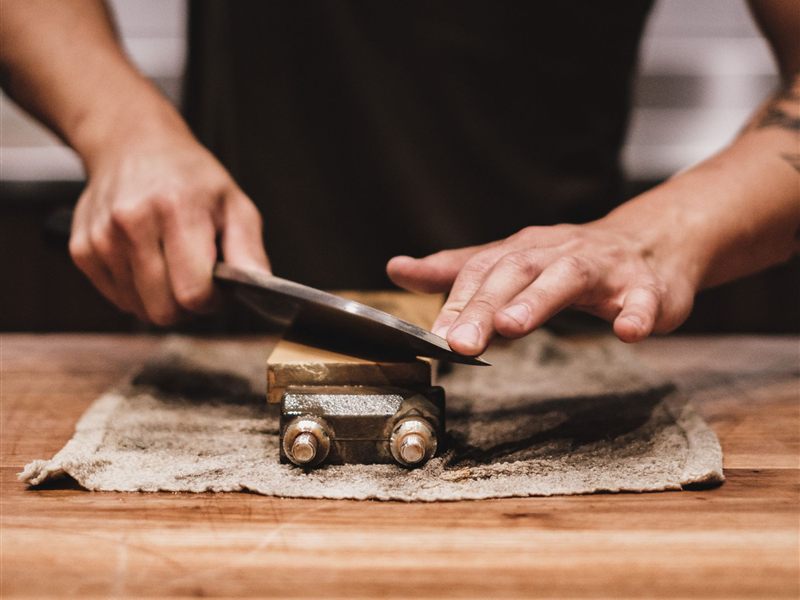
A good fit if you want hands-on control and a skill to learn.
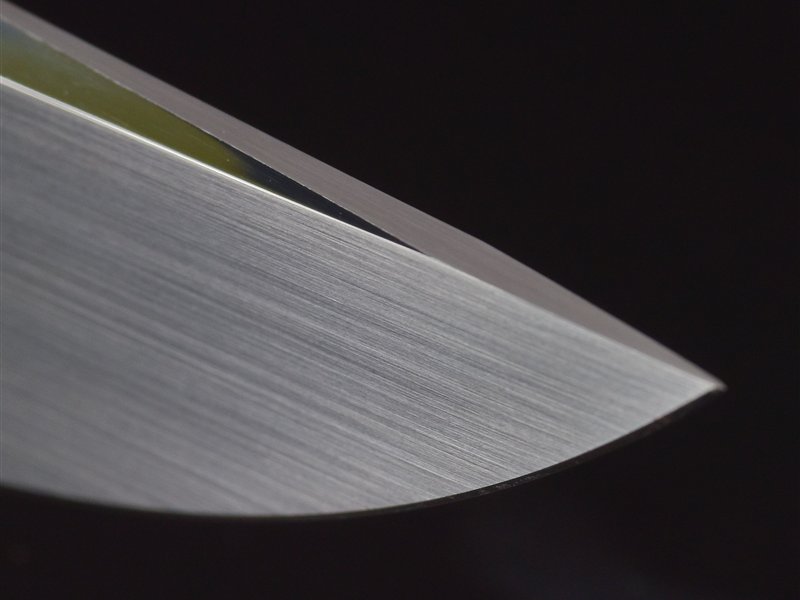
A good fit if you want plug in and pull the blade through.
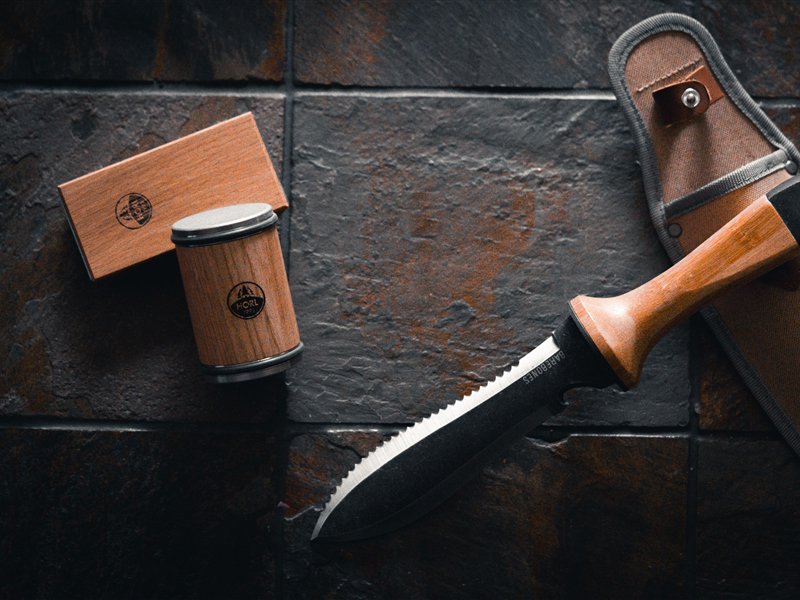
A good fit if you want guided angles without a motor.
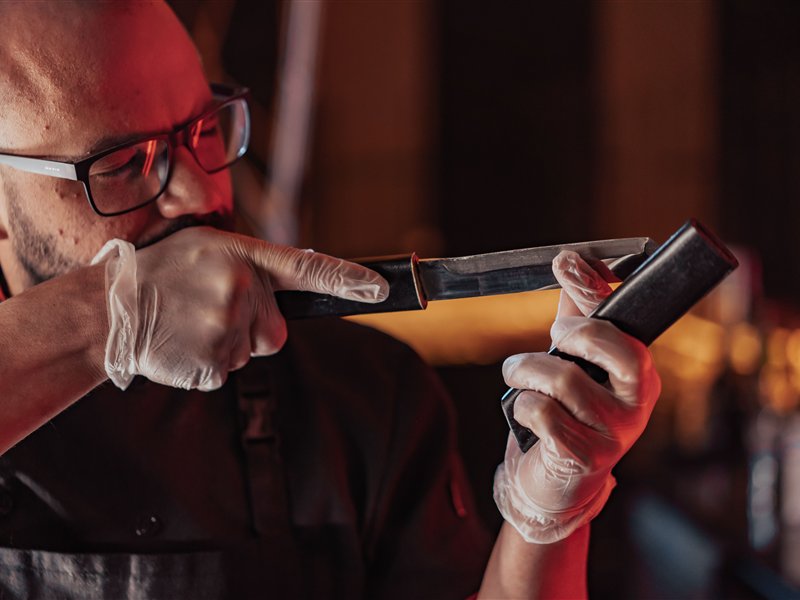
A good fit if you want a clamp with adjustable angles.
Photos: Pexels and Unsplash. Illustrative; brands shown may not be in our picks.
| Why consider it? | Main compromise | A sensible starting point for… | |
|---|---|---|---|
| Honing rod | Small tool for maintaining compatible edges | Does not replace full sharpening; rod material matters | Someone whose knife needs routine maintenance |
| Pull-through | Compact, no outlet, guided slots | Limited to the angles and blade types the model supports | Someone who wants a simple routine for compatible kitchen knives |
| Whetstone | Freedom to control angle, abrasive and contact | Requires practice, preparation and stone maintenance | Someone willing to learn a hands-on skill |
| Electric | Powered abrasives with built-in guides | Outlet and storage space; stage selection still matters | Someone prioritizing convenience |
| Rolling | Magnetic angle support with a manual rolling motion | Available angles and blade geometry limit suitability | Someone who prefers guided manual sharpening |
| Guided kit | Holds the knife while a guided abrasive moves across it | More setup and space; blade fit needs checking | Someone who enjoys a deliberate, adjustable process |
A traditional steel honing rod is mainly an edge-maintenance tool. It can help straighten an edge that has moved out of alignment, but it does not replace sharpening when the edge needs to be rebuilt. Ceramic and diamond rods are abrasive and can remove material, so “all rods only straighten” is too simple. Explanation of steel and ceramic rods.
Sharpening removes material to form an edge. How much is removed depends on the abrasive, the tool, the condition of the knife and how you use it. An electric motor does not make every sharpener equally aggressive, and a manual tool is not automatically gentle.
If a knife is chipped, bent or has an unfamiliar edge, ask its manufacturer or a sharpening professional before choosing a home tool.
Start small: buy a maintenance tool only if maintenance is the task. If you need sharpening, compare a compatible compact manual tool with a basic stone setup. Do not buy a rod expecting it to restore every dull knife.
Prioritize convenience: compare a powered model with a manual tool that supports the same edge. Look at the workflow and compatibility before paying for more stages.
Invest in guided control: consider a rolling or clamp-and-rod system if its support and adjustments fit your knives. These designs can involve a larger purchase without being the quickest process.
Consider an enthusiast setup: additional abrasives, a more substantial clamp system or specialist accessories may be worthwhile for someone who wants sharpening to become a hobby. They are not requirements for every home cook.
We identify the exact product using the linked Amazon listings. Our practical suggestions are editorial interpretations of those listings, not hands-on tests. Claims in the listings are the sellers’ own.
“From” amounts are approximate starting points we checked on Amazon and rounded down. Prices change often, and sales such as Black Friday can move them a lot, so check the current price, seller, size, delivery date and returns before you buy. Ratings were read on the clean Amazon pages in late October or early November 2026.
Candidates for different needs, grouped by type and ordered by approximate starting amount, not a ranking.
No pick matches all of these filters together. Go back to the filters and remove one, or use “Clear filters”.
A steel rod mainly realigns an edge that has moved out of line. It does not replace sharpening when an edge needs to be rebuilt. Check your knife maker’s advice before you choose a rod.
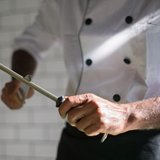 Honing rod
Why consider it: you want a well-reviewed rod with a loop for hanging it.
★ 4.7 · 8,403 ratings on Amazon
According to the listing, a 12-inch rod in carbon steel plated with nickel-chrome, with an ergonomic non-slip handle and a hanging loop, described for kitchen, household, sporting and pocket knives.
Key specs:
Format: Carbon steel, 12 in
Detail: Hanging loop
Main compromise: it is a maintenance tool only. Check that the length and the rod material suit your knives.
Honing rodWhy consider it: you want a steel from a knife maker’s own line.
★ 4.6 · 2,713 ratings on Amazon
According to the listing, a fine-edge sharpening steel with a smooth polypropylene handle, described for chef knives, BBQ tools and everyday cutlery. The listing suggests honing every other time you use a knife.
Key specs:
Format: Fine-edge steel
Detail: Polypropylene handle
Main compromise: it has fewer reviews than the Utopia, and it still only maintains an edge rather than sharpening it.
Honing rodWhy consider it: you want routine edge maintenance.
★ 4.5 · 10,881 ratings on Amazon
According to the listing, a 12-inch carbon steel honing rod with a non-slip handle and an anti-slip metal tip, sized for common chef knives and everyday kitchen blades.
Key specs:
Format: Carbon steel, 12 in
Detail: Non-slip handle
Main compromise: a rod realigns an edge but does not rebuild a dull one, and the listing does not name the maker, so check the return terms.
You pull the blade through guided slots. They are compact and need no outlet, but they are limited to the angles and blade types each model supports. Follow the instructions for serrated and ceramic blades.
Pull-throughWhy consider it: you want a simple tool, from a heavily reviewed listing.
★ 4.5 · 39,193 ratings on Amazon
According to the listing, a three-slot pull-through sharpener with a diamond first stage, an ergonomic handle, a non-slip base and a cut-resistant glove included.
Key specs:
Format: 3 slots, diamond first
Detail: Glove included
Main compromise: the slots fix the angle, so check that it suits your knife, and follow the model’s own instructions for each slot.
Pull-throughWhy consider it: you want a knife maker’s sharpener with a coarse and a fine stage.
★ 4.4 · 2,391 ratings on Amazon
According to the listing, a four-stage pull-through sharpener with coarse and fine stages, described for Western and Asian-style blades, with a comfortable handle and a non-slip bottom.
Key specs:
Format: 4 stages
Detail: Coarse and fine
Main compromise: check which stage suits your blade and the angle it supports. It has far fewer reviews than the Kitchellence.
Pull-throughWhy consider it: you want a compact tool without a motor and a choice between 15° and 20°.
★ 4.4 · 6,742 ratings on Amazon
A manual sharpener for compatible 15° and 20° edges, with two stages and diamond abrasives in a compact body. Consider it if you want a tool without a motor and need a choice between those settings. Identify your knife’s angle first, and follow the specific instructions for serrated blades.
Key specs:
Format: 15° and 20°, 2 stages
Detail: Diamond abrasives
Main compromise: a choice of two angles does not establish better sharpening performance.
You hold the angle yourself, which takes practice and some preparation. A stone also needs maintaining. Check the exact kit for its base, guides and care instructions.
WhetstoneWhy consider it: you want to try a whetstone.
★ 4.5 · 1,323 ratings on Amazon
According to the listing, a dual-sided 400/1000 grit whetstone made of white corundum, with a rubber base to hold it in place.
Key specs:
Format: Dual-sided stone
Detail: Rubber base
Main compromise: it has no angle guide in the listing, and it has fewer reviews than the other stone kits here.
WhetstoneWhy consider it: you want a coarse stone and a fine stone in one set.
★ 4.5 · 7,301 ratings on Amazon
According to the listing, a set of dual-sided corundum whetstones in 400/1000 and 3000/8000 grits. The listing title also mentions a leather accessory, so check the exact contents.
Key specs:
Format: 400/1000 and 3000/8000
Detail: Two dual-sided stones
Main compromise: a full set means more to store and look after, and grit numbers alone do not make a stone suited to every repair.
WhetstoneWhy consider it: you want to learn angle control, with a base and an angle guide in the kit.
★ 4.6 · 25,724 ratings on Amazon
Offers two grit surfaces in one stone. The selected Amazon kit lists a bamboo base and an angle guide. Consider this route if you want to learn angle control and are comfortable preparing and maintaining a stone. Manufacturer details.
Key specs:
Format: Dual-sided stone
Detail: Bamboo base, angle guide
Main compromise: check the exact kit for its base, guides and care instructions; 1000 grit may not suit a badly damaged edge.
WhetstoneWhy consider it: you already know how to use a stone and want one medium stone with a high average rating.
★ 4.8 · 6,810 ratings on Amazon
According to the listing, a single #2000 whetstone that can be used for medium sharpening and as a finishing stone, measuring 8.3 x 2.8 x 0.6 inches.
Key specs:
Format: Single stone
Detail: Medium and finishing
Main compromise: it is a single grit with no base or guide in the listing, so you may need other stones for repairs.
Powered abrasives with built-in guides. They need an outlet and space, and the right stage and blade support still matter. Many exclude serrated knives, so check the model.
ElectricWhy consider it: you want an electric sharpener.
★ 4.3 · 1,218 ratings on Amazon
According to the listing, a compact two-stage electric sharpener for home use, with one stage for sharpening and one for polishing.
Key specs:
Format: 2 stages
Detail: Sharpen and polish
Main compromise: the listing gives few details on supported angles and blades, and it has fewer reviews than the Presto.
ElectricWhy consider it: you want a heavily reviewed electric sharpener with two stages.
★ 4.5 · 18,858 ratings on Amazon
According to the listing, a two-stage electric sharpener with Sapphirite sharpening wheels for kitchen and sport knives, described for non-serrated blades.
Key specs:
Format: 2 stages
Detail: Non-serrated blades
Main compromise: it is for non-serrated blades, so do not use it on a serrated knife. Check your knife against the manual first.
ElectricWhy consider it: you have knives that need either a 15° or a 20° edge.
★ 4.5 · 1,069 ratings on Amazon
Provides separate sharpening stages for 15° and 20° straight edges, followed by a finishing stage. This makes it a candidate for a collection with compatible knives needing either setting. It still requires you to identify the correct angle and follow the appropriate stage sequence. Manufacturer details.
Key specs:
Format: 15° and 20° stages
Detail: Finishing stage
Main compromise: serrated knives need the model’s specific instructions.
You roll the knife across a disc on a magnetic support that holds the angle. They offer guidance without a motor, but the angles and blade shapes they accept are limited.
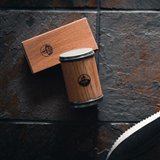 Rolling
Why consider it: you want to try a rolling sharpener.
★ 4.3 · 2,138 ratings on Amazon
According to the listing, a rolling sharpener kit with a #400 diamond disc and a #3000 ceramic disc, on a wooden body with a magnetic multi-angle support.
Key specs:
Format: #400 diamond, #3000 ceramic
Detail: Magnetic support
Main compromise: it has fewer reviews than the HORL and Tumbler models, so check the angles it supports and the return terms.
RollingWhy consider it: you prefer a guided process without a motor.
★ 4.4 · 3,466 ratings on Amazon
Uses manual rolling motion and a magnetic support offering 15° and 20° positions. Consider it if you prefer a guided process without a motor. Check that the holder and sharpening surfaces suit your blade; the maker excludes serrated knives and scissors. Manufacturer details.
Key specs:
Format: 15° and 20°
Detail: Wooden body
Main compromise: the maker excludes serrated knives and scissors.
RollingWhy consider it: you want a rolling sharpener with a diamond disc and 15° and 20° positions.
★ 4.4 · 4,579 ratings on Amazon
According to the listing, a rolling sharpener with a fixed diamond disc and a stainless steel honing disc, on a magnetic angle support with 15° and 20° positions.
Key specs:
Format: 15° and 20°
Detail: Diamond and steel discs
Main compromise: the listing shares its reviews with the HORL 2, so check which model you select, and check that the support suits your blade.
A clamp holds the knife while an abrasive moves across it at the angle you set. There is more setup and space involved, and blade fit needs checking.
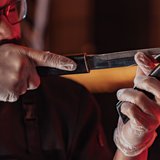 Guided kit
Why consider it: you want a guided system with adjustable angles.
★ 4.5 · 11,584 ratings on Amazon
According to the listing, a fixed-angle guided system with an adjustable angle from 15° to 30° and graded abrasives, described for kitchen, pocket and hunting knives.
Key specs:
Format: 15° to 30°
Detail: Graded abrasives
Main compromise: allow for clamping, setup and checking blade clearance. It does not offer the abrasive range of the Elite or the Professional.
Guided kitWhy consider it: you want to work through abrasive stages with angle guidance.
★ 4.6 · 6,469 ratings on Amazon
A manual clamp-and-rod system, not an electric sharpener. Its published adjustment range is 15°–30° in 1° increments, with diamond abrasives, ceramic and a leather strop included. It is a candidate for someone who wants to work through abrasive stages with angle guidance. Do not confuse it with the separate Professional model. Manufacturer details.
Key specs:
Format: 15°–30°, 1° steps
Detail: Diamond, ceramic, strop
Main compromise: allow for clamping, setup and checking blade clearance.
Guided kitWhy consider it: you want a stable benchtop setup and a wide range of abrasives.
★ 4.5 · 1,055 ratings on Amazon
According to the listing, a benchtop system with angles from 15° to 30° set on a digital indicator, a rigid metal frame, a V-block clamp and a weighted 7.5-pound base, with diamond abrasives from 220 to 800 grit.
Key specs:
Format: 15° to 30°, digital
Detail: Weighted base, V-block clamp
Main compromise: a substantial piece of equipment to store.
Four close calls from the picks above, side by side. Based on the listings, not a hands-on test.
Pick this one if you want a compact tool with no outlet and no motor.
Pick this one if you want powered abrasives, for non-serrated blades.
Key difference: Pulling the blade through by hand, or plugging in a two-stage electric tool.
Pick this one if you want to hold the angle yourself and learn the skill.
Pick this one if you want a clamp that holds the angle for you.
Key difference: A stone you hold by hand, or a clamp that fixes the angle between 15° and 30°.
Pick this one if you want a heavily reviewed rod with a hanging loop.
Pick this one if you want a steel from a knife maker with a polypropylene handle.
Key difference: A nickel-chrome carbon steel rod with a loop, or a fine-edge steel from a knife brand.
Pick this one if you want a wooden-bodied rolling sharpener with 15° and 20° positions.
Pick this one if you want a diamond disc and a steel honing disc on a magnetic support.
Key difference: Two rolling sharpeners: check the discs and the angle positions.
As described in the listings; check the exact model before buying.
| Sharpener | Type | Format | Detail | From |
|---|---|---|---|---|
| Utopia Honing Rod | Honing rod | Carbon steel, 12 in | Hanging loop | $9 |
| Henckels Steel | Honing rod | Fine-edge steel | Polypropylene handle | $11 |
| Generic 12-inch rod | Honing rod | Carbon steel, 12 in | Non-slip handle | $14 |
| Kitchellence 3-Stage | Pull-through | 3 slots, diamond first | Glove included | $14 |
| Zwilling 4-Stage | Pull-through | 4 stages | Coarse and fine | $18 |
| Chef’sChoice 4643 | Pull-through | 15° and 20°, 2 stages | Diamond abrasives | $45 |
| vuwo 400/1000 | Whetstone | Dual-sided stone | Rubber base | $9 |
| Complete Stone Set | Whetstone | 400/1000 and 3000/8000 | Two dual-sided stones | $27 |
| Sharp Pebble 1000/6000 | Whetstone | Dual-sided stone | Bamboo base, angle guide | $34 |
| Shapton #2000 | Whetstone | Single stone | Medium and finishing | $46 |
| Northmas 2-Stage | Electric | 2 stages | Sharpen and polish | $18 |
| Presto 08800 | Electric | 2 stages | Non-serrated blades | $45 |
| Chef’sChoice 1520 | Electric | 15° and 20° stages | Finishing stage | $175 |
| AIERLIAN Rolling | Rolling | #400 diamond, #3000 ceramic | Magnetic support | $32 |
| Original Tumbler | Rolling | 15° and 20° | Wooden body | $98 |
| HORL 3 Cruise | Rolling | 15° and 20° | Diamond and steel discs | $110 |
| Work Sharp Precision Adjust | Guided kit | 15° to 30° | Graded abrasives | $66 |
| Work Sharp Elite | Guided kit | 15°–30°, 1° steps | Diamond, ceramic, strop | $120 |
| Work Sharp Professional | Guided kit | 15° to 30°, digital | Weighted base, V-block clamp | $245 |
Check the current listing, the seller, the size, delivery and returns before you buy.
Your next step
Check the angle and the knives you own, then choose the exact sharpener before buying.